


Rpela's electric shark deterrent serves surfers at high-risk breaks, but its AU$449 price tag, pre-session charging requirements, and board-specific installation leave many ocean users looking for practical alternatives.
Whether you swim, surf, dive, or fish, you need a shark deterrent suited to your activity without the maintenance requirements of electric systems. The Sharkbanz 2 leads this list as a battery-free magnetic deterrent for multiple water activities, supported by research into magnetic shark deterrence and over a decade of real-world use.
This guide covers seven alternatives to Rpela, including wearable magnetic deterrents, surf-specific devices, fishing tackle, electric deterrents, and visual solutions.
Key Takeaways
- Battery-free magnetic technology eliminates charging requirements: Sharkbanz products use permanent magnets that remain active without batteries, removing the risk of forgetting to charge before a session.
- Government-tested fishing deterrents exist: The Western Australian Department of Primary Industries and Regional Development found that Sharkbanz Sentry, now sold as Zeppelin, reduced shark depredation from 40% to 20% of hooked fish in the Montebello Islands trials.
- Different technologies suit different activities: Wearable magnetic devices, electrically powered deterrents, fishing-specific equipment, and visual solutions serve different ocean users.
- Electric alternatives require power: Fishtek Marine's SharkGuard Pro uses electric pulses for fishing applications, while Sentinel Ocean Systems' Freedom8 provides a rechargeable personal electric deterrent.
- Visual deterrents provide complementary protection: Shark Eyes decals and SAMS-patterned wetsuits use visual approaches, though their effectiveness as standalone protection remains scientifically uncertain.
- Scientific evidence varies across deterrents: Research has documented shark avoidance responses under specific testing conditions, but no shark deterrent guarantees protection against every encounter.
- Authentic products matter: Buyers should choose deterrents with identifiable manufacturers, verified specifications, transparent research, and clear warranty support.
How Does Magnetic Shark Deterrent Technology Work?
Magnetic shark deterrents use permanent magnets to create a localized magnetic field that may trigger avoidance behavior when sharks move through it. This mechanism involves electromagnetic induction and sharks' sensitive electroreceptive system.
Sharks possess specialized sensory organs called the ampullae of Lorenzini, which detect weak electric fields. Research on electrosensory shark deterrents explains how sharks may indirectly detect magnetic fields through electromagnetic induction. When a shark swims through the magnetic field surrounding a Sharkbanz device, relative movement can generate an electrical signal detectable by these electroreceptors. The resulting stimulus may cause the shark to turn away, similar to a bright light suddenly shining in someone's eyes.
Relative movement is essential to the proposed induction mechanism. The permanent magnetic field is always present, but the induced electrical signal depends on movement between the shark and magnet. Magnetic field strength also decreases rapidly with distance, approximately following an inverse-cube relationship in the far field. Sharkbanz reports an effective deterrent range of 3 to 6 feet (1 to 2 meters) per device.
The technology is designed to influence sharks and rays through their electroreceptive systems without physically harming them. However, responses vary by species, magnetic field strength, device placement, and environmental conditions.
These principles explain the scientific basis of magnetic deterrence, but they do not establish that every shark will respond or that a particular device will prevent shark bites.
What Scientific Research Supports Sharkbanz Technology?
Government-funded research, university studies, and preliminary academic findings provide evidence of magnetic deterrence under specific conditions. However, these studies do not directly establish reduced human shark-bite risk.
Western Australia DPIRD research (2020 to 2021)
The Western Australian Department of Primary Industries and Regional Development monitored approximately 180 hours of underwater footage across 60 fishing sites. At the Montebello Islands, shark depredation fell from 40% without deterrents to 20% using Sharkbanz Sentry, now sold as Zeppelin. The broader research found deterrent devices reduced depredation probability by approximately 65%. Responses varied among whaler and lemon sharks.
Florida Atlantic University research (2024)
A Florida Atlantic University thesis analyzed 3,060 shark observations involving bull, sandbar, silky, and lemon sharks on baited underwater rigs. The Zeppelin triggered avoidance during 21.7% of in-range approaches versus 2.6% for a non-magnetic control. Bull sharks bit protected bait zero times versus nine control bites, although lemon sharks showed limited responses. The study was funded by the Colgan Foundation, with devices supplied by Sharkbanz.
Texas A&M University-Corpus Christi research (2026)
Preliminary findings presented by Kyle King at a June 26, 2026, master's thesis seminar examined active and inactive Zeppelin devices across 41 recreational reef-fishing trips. Sharks caused 88% of identified depredation events, with no shark depredation recorded using an active Zeppelin. Target-species catch rates showed no significant differences. These findings remain preliminary and have not been established as peer-reviewed research.
Bimini bull shark trial (2017)
A Sharkbanz-funded field trial recorded 1,235 bull shark approaches to baited human-shaped models over two hours and 38 minutes. Sharks did not attack Sharkbanz-equipped models, while unprotected controls experienced attacks approximately every 46 seconds. Coastal Carolina University researchers independently evaluated the footage. The results demonstrate avoidance under controlled conditions, not guaranteed prevention of human shark bites.
1) Sharkbanz 2
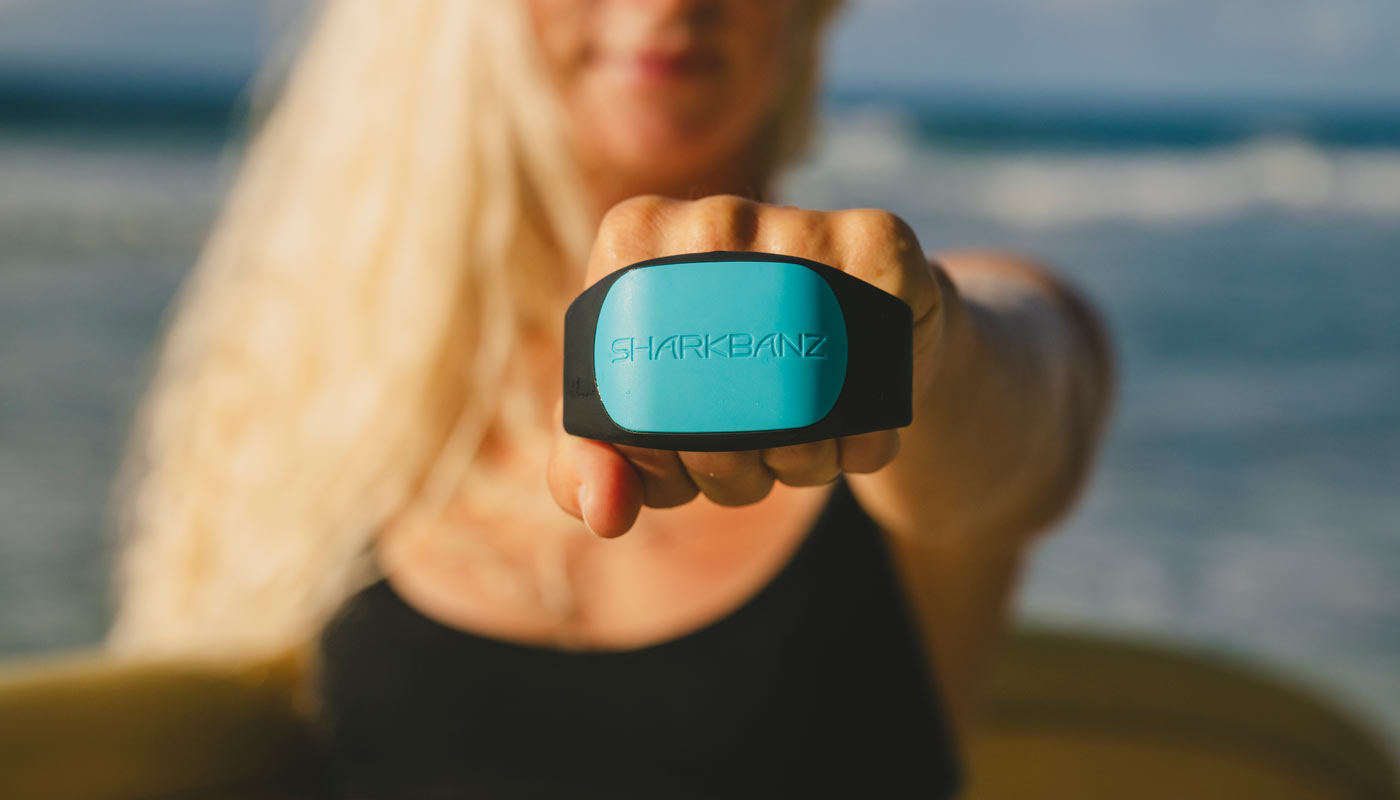
The Sharkbanz 2 is the best overall alternative to Rpela for ocean users who want a wearable magnetic deterrent that works across multiple activities without charging or board installation.
Why Sharkbanz 2 Leads the Alternatives
The Sharkbanz 2 uses patented permanent magnet technology that creates a localized magnetic field. As sharks move through this field, electromagnetic induction may produce electrical signals detectable by their ampullae of Lorenzini.
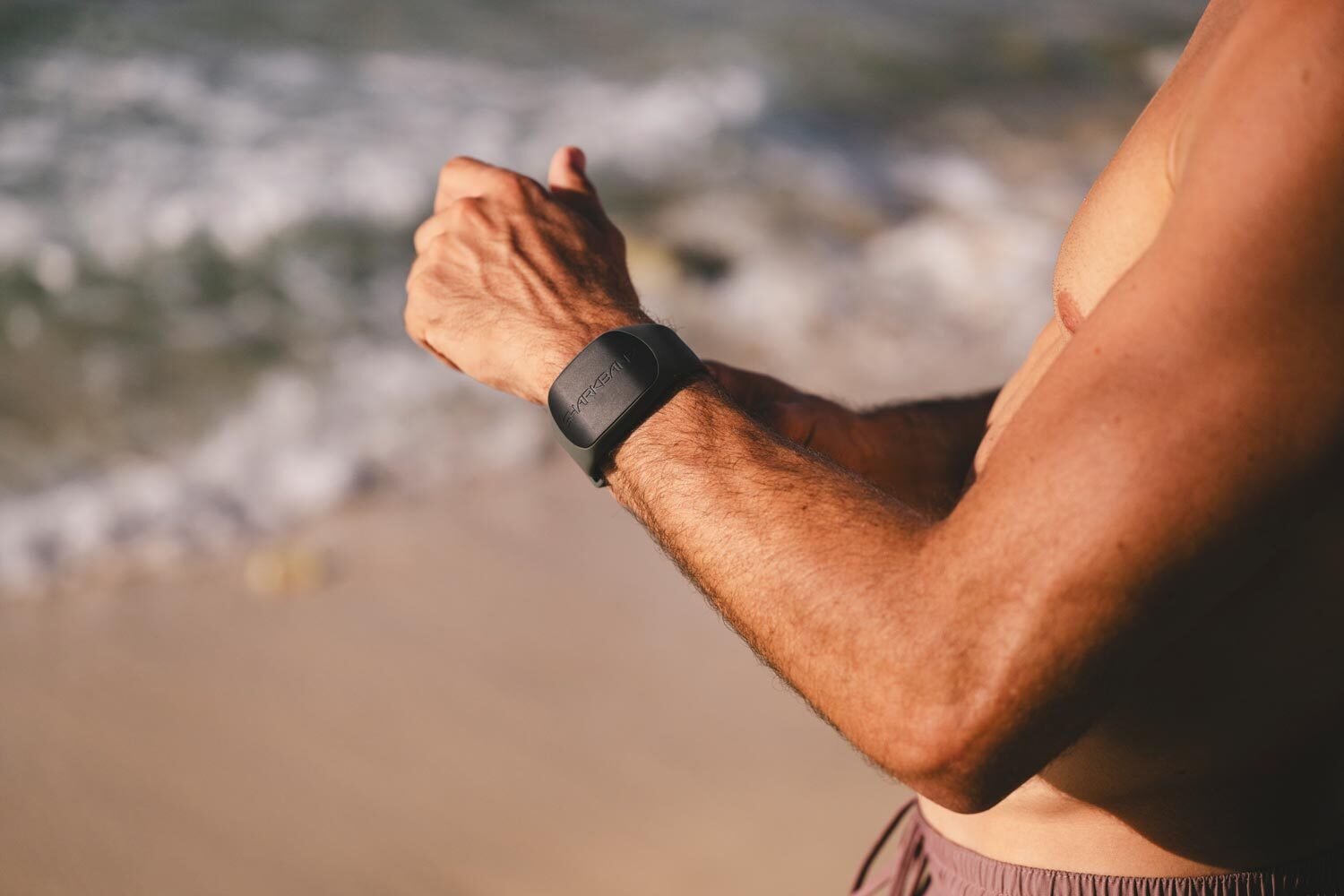
Its wearable design allows users to position the deterrent on the ankle or wrist rather than mounting it permanently to a surfboard.
Unlike electric systems, its magnetic field remains present without batteries, charging, or manual activation.
Key specifications:
- Price: $138
- Weight: 3 ounces (85g)
- Depth rating: 100 meters (330 feet)
- Power source: Permanent magnet (no batteries)
- Reported effective range: 1 to 2 meters (3 to 6 feet)
- Warranty: 3 years
Supporting Evidence
- Scientific research on permanent magnets has documented avoidance responses across several shark species. For example, Rigg et al. (2009) investigated magnetic deterrent responses in several Australian shark species, supporting the broader biological basis for this technology. The study did not directly test Sharkbanz 2.
- The 2024 FAU thesis reported greater avoidance responses around the Sharkbanz Zeppelin than a non-magnetic control. Although the Zeppelin uses Sharkbanz magnetic technology, the experiment tested fishing equipment rather than a wearable band.
- More directly relevant to the wearable product, the Sharkbanz-funded Bimini trial documented zero attacks on band-equipped baited human models during treatment trials. This experiment was independently evaluated by Coastal Carolina University.
These studies provide supporting evidence of shark avoidance under their respective testing conditions, but they do not establish a measured reduction in real-world human shark-bite risk.
Who Should Choose Sharkbanz 2
This device fits ocean users who:
- Participate in multiple water activities (surf, swim, dive, snorkel)
- Want a device that works without charging
- Need a wearable option for family members
- Prefer ankle or wrist placement over board installation
- Travel frequently with their gear
The Sharkbanz 2 provides a convenient additional deterrent layer, although no deterrent can guarantee protection against every shark encounter.
2) FCS x Sharkbanz POD
The FCS x Sharkbanz POD is a surf-specific alternative to Rpela because it attaches to a surf leash, uses battery-free magnetic technology, and costs $120 without requiring permanent board installation.
Surf-Specific Design Partnership
FCS collaborated with Sharkbanz to develop the POD specifically for board sports.
The device attaches to a surf leash cuff using a neoprene pouch with a Velcro strap, positioning the magnetic deterrent near the surfer without requiring modifications to the board.
Unlike the wearable Sharkbanz 2, the POD is designed primarily for leash-based activities.
Key specifications:
- Price: $120
- Weight: 56.5g (2 oz)
- Attachment: Surf leash cuff
- Depth rating: 100 meters (330 feet)
- Technology: Same patented magnetic technology as Sharkbanz 2
- Warranty: 1 year
Advantages Over Rpela for Most Surfers
Rpela requires installation into the surfboard itself, with the V2 Pro designed primarily for flat polyester boards measuring between 5'10" and 7'6". Softboards, plastic boards, and certain non-flat constructions are not compatible.
Each additional compatible board requires a separate AU$129 housing and electrode sticker kit.
The FCS POD moves between compatible leash setups without requiring another magnetic unit. A surfer with a three-board quiver pays US707 for Rpela with two additional housing kits, before maintenance expenses.
Cost Comparison for a 3-Board Quiver
The FCS x Sharkbanz POD does not require additional installation kits for compatible boards, while Rpela requires a housing kit for each additional board.
FCS x Sharkbanz POD:
- Initial device: US$120
- Additional board setups: US$0
- Maintenance: No batteries or charging required
- Total cost for three boards: US$120
Rpela V2 Pro:
- Initial device: AU$449
- Additional housing kit for board 2: AU$129
- Additional housing kit for board 3: AU$129
- Maintenance: Electrode cleaning and potential replacement
- Total cost for three boards: AU$707
The FCS POD can move between compatible leash setups without additional magnetic units, while Rpela requires separate housing kits for each additional board. Prices are shown in their respective currencies, excluding maintenance expenses.
Who Should Choose FCS POD
This device fits surfers who:
- Own multiple boards with compatible leash setups
- Prefer the deterrent positioned at the leash rather than worn on the body
- Want a surf-specific option without additional board installation kits
- Use leashes for paddleboarding, bodyboarding, or foiling
The POD offers practical portability and battery-free operation, though its magnetic deterrence remains localized and subject to the same scientific limitations as other magnetic devices.
3) Sharkbanz Zeppelin
The Sharkbanz Zeppelin is a fishing-specific alternative to electric shark deterrents, with independent government testing showing that correctly positioned magnetic devices can reduce shark depredation. The product is currently listed as sold out on Sharkbanz's U.S. website.
Government-Tested Fishing Deterrent
The Western Australian Department of Primary Industries and Regional Development investigated shark deterrent performance during recreational fishing at the Montebello Islands and Exmouth.
The government research documented reduced depredation using deterrent devices, including the Sharkbanz Sentry, now sold as Zeppelin. Under the Montebello Islands conditions, the proportion of hooked fish taken by sharks decreased from 40% without deterrents to 20% with the Sharkbanz device.
Video footage showed whaler sharks approaching hooked fish and turning away after encountering the magnetic field.
Key specifications:
- Listed price: $69.99
- Weight: 6.5 oz (185g)
- Reported deterrent range: 3 to 6 feet
- Construction: Biodegradable PLA
- Award: ICAST 2021 Best Terminal Tackle
- Warranty: 1 year
- Availability: Sold out on the official U.S. product page at the time of checking
Three Rigging Methods for Different Fishing Styles
Bottom fishing (inline): Attach the Zeppelin approximately 18 to 36 inches from the fish tail, replacing or supplementing your sinker. Correct positioning helps expose approaching sharks to the magnetic field during retrieval. The official rigging instructions specify measuring this distance from the anticipated fish tail rather than simply from the hook.
Deployment method: Keep the Zeppelin ready and attach it after hookup. This can reduce potential snag losses in heavy structure while allowing deterrent coverage during retrieval.
Wade fishing and spearfishing: Attach the device to fish bags, stringers, or other suitable equipment according to the manufacturer's rigging guidance. This places the deterrent near accumulated catch.
Supporting Research from U.S. Universities
A 2024 FAU thesis found the Zeppelin produced avoidance behavior during approximately 21.7% of in-range shark approaches, compared with 2.6% for the non-magnetic control.
The research involved baited camera rigs and four shark species. Bull sharks showed zero bites on magnet-protected bait versus nine on control bait, although responses differed by species. Preliminary findings presented at a June 26, 2026, Texas A&M University-Corpus Christi master's thesis seminar by Kyle King also reported zero shark depredation events when using an active Zeppelin during experimental and charter reef-fishing trials.
The preliminary Texas A&M research covered 41 recreational fishing trips and found no statistically significant difference in target-species catch rates between active and inactive devices. These findings require further testing across fisheries and have not been established as peer-reviewed research.
Who Should Choose Zeppelin
This device fits anglers who:
- Experience shark depredation on bottom-fishing trips
- Wade fish in shark-active waters
- Spearfish and need catch protection
- Want to reduce shark interference when targeting grouper, snapper, or amberjack
The Zeppelin is designed to help protect hooked or retained fish, but effectiveness depends on species, rigging position, fishing conditions, and shark behavior. Buyers should check current availability before planning a purchase.
4) Shark Eyes Decals
Shark Eyes decals provide a visual approach to shark deterrence that can complement magnetic or electric devices. Unlike Sharkbanz products, they do not create a magnetic field or require batteries.
What Visual Deterrents Claim to Do
Shark Eyes decals feature large eye patterns intended to create the appearance of an animal watching an approaching shark.
The theory suggests that sharks relying on surprise during an investigatory or predatory approach may hesitate when they perceive that they have been detected.
The decals can be attached to suitable board surfaces without electronic components.
Product details:
- Price: From AU$14.99 on the manufacturer's Australian store
- Technology: Visual eye-pattern deterrence
- Installation: Adhesive decal on a suitable board surface
- Power source: None
- Maintenance: No charging or electronic maintenance
- Transferable: Generally intended for use on the surface where applied
The Scientific Evidence Gap
The proposed mechanism draws on research into predator-prey interactions, visual recognition, and the importance of surprise during hunting.
However, studies describing shark hunting behavior do not independently establish that Shark Eyes decals prevent shark encounters. Dr. Charlie Huveneers has also discussed concerns that eye-like markings might not always have the intended deterrent effect. Shark Eyes has described testing efforts, but independently published evidence establishing reliable shark deterrence from its decals remains limited.
This differs from magnetic deterrents, where government field research and university experiments have documented avoidance responses under defined conditions.
When Visual Deterrents Make Sense
Visual deterrents may serve as a complementary measure rather than primary protection:
- Pair with a Sharkbanz 2 or FCS POD for a layered deterrent approach
- Use on compatible boards without adding powered components
- Consider as an additional visual measure alongside established ocean safety practices
There is currently insufficient evidence to establish that combining Shark Eyes with magnetic deterrents provides a measurable improvement in human shark-bite risk reduction.
5) Fishtek Marine SharkGuard Pro
Fishtek Marine's SharkGuard Pro is an electric shark deterrent developed for commercial and recreational rod-and-line fishing. Unlike Rpela, which is designed for surfboards, SharkGuard Pro targets shark depredation around hooked fish.
Electric Pulse Technology
SharkGuard Pro produces repeated electric pulses in seawater. The electrical field is intended to overstimulate approaching sharks' electroreceptors and encourage avoidance behavior near fishing equipment.
The device automatically activates when submerged and switches off when removed from the water.
Its stainless-steel swivel attachment points allow integration into different fishing rigs. The manufacturer also describes a durable polycarbonate housing designed for demanding marine conditions.
Key specifications:
- Technology: Pulsed electric shark deterrence
- Primary application: Recreational and commercial rod-and-line fishing
- Battery life: Approximately 6 hours
- Activation: Automatic immersion switch
- Construction: Polycarbonate housing with stainless-steel fittings
- Pricing: Available through manufacturer inquiry
What Scientific Evidence Supports SharkGuard?
Fishtek Marine has conducted research on electrically powered shark deterrents in commercial fisheries. A 2022 peer-reviewed study by Doherty and colleagues investigated an earlier SharkGuard device on pelagic longlines targeting bluefin tuna in the Mediterranean.
The researchers reported approximately 91% lower blue shark bycatch and 71% lower pelagic stingray bycatch, measured by standardized catch per unit effort, on hooks fitted with SharkGuard compared with control hooks.
However, that experiment involved an earlier SharkGuard model designed for longline fisheries, not the SharkGuard Pro intended for rod-and-line fishing. It measured incidental capture of sharks and rays, not shark depredation or human shark-bite risk.
The findings support the potential of pulsed electric technology to influence shark behavior, but they should not be treated as direct validation of SharkGuard Pro's performance across recreational fishing conditions.
Who Should Choose SharkGuard Pro
SharkGuard Pro suits anglers who:
- Experience frequent shark depredation during rod-and-line fishing
- Prefer an electrically powered deterrent to permanent magnets
- Need a device compatible with different fishing rigs
- Can accommodate battery management
The manufacturer warns that contact with an activated device in seawater may cause involuntary muscle contractions. Users with implanted electronic medical devices, pregnant users, and people with relevant medical conditions should follow the manufacturer's safety guidance.
SharkGuard Pro is a fishing-specific option rather than a personal shark deterrent for swimming or surfing.
6) Sentinel Ocean Systems Freedom8
The Sentinel Ocean Systems Freedom8 is a rechargeable electric shark deterrent designed for divers, spearfishers, and other ocean users seeking personal electric deterrence.
It offers a different technology from Sharkbanz's permanent magnets, using an active electrical field rather than movement-induced electrical signals.
Wearable Electric Deterrence
Freedom8 uses Shark Shield electrical-field technology to create a deterrent field around the user.
The electrical pulses are intended to stimulate sharks' ampullae of Lorenzini and produce avoidance responses during close approaches.
Unlike Sharkbanz, Freedom8 requires battery charging and electronic components. Its rechargeable design supports longer underwater sessions but introduces charging and maintenance requirements.
Key specifications:
- Listed price: From US$599
- Technology: Powered electric-field deterrence
- Battery life: Approximately 6 to 7 hours per charge
- Maximum operating depth: 50 meters (164 feet)
- Battery: Rechargeable lithium-ion
- Warranty: 2 years
Supporting Scientific Evidence
Electric shark deterrents have been evaluated in peer-reviewed experiments involving white sharks.
A 2018 Flinders University study tested several personal shark deterrents using baited, stationary surfboard replicas near the Neptune Islands, South Australia. The Ocean Guardian Freedom+ Surf electric device reduced the proportion of bait taken from approximately 96% without an active deterrent to 40% with the device operating. This demonstrated a statistically significant effect on white shark interactions under the experimental conditions.
Freedom8 uses related Shark Shield electrical-field technology, but the 2018 study did not directly test Freedom8. Its results cannot establish identical performance for the newer product.
Who Should Choose Freedom8
Freedom8 may suit ocean users who:
- Prefer electrically powered deterrence
- Dive or spearfish within the device's operating limits
- Can manage regular charging and battery maintenance
- Want a personal deterrent rather than a board-mounted installation
- Have a higher equipment budget
The device provides a personal electric alternative to Rpela, although its size, operating requirements, and intended applications differ from Sharkbanz's lightweight magnetic bands.
7) SAMS Radiator Shark Deterrent Wetsuits
SAMS Radiator wetsuits use visual camouflage and contrasting patterns intended to influence how sharks perceive a person underwater.
Unlike electric or magnetic deterrents, these wetsuits do not generate a magnetic field or electric pulse. Their proposed deterrent effect depends on shark vision and visual interpretation.
Visual Camouflage Technology
SAMS, or Shark Attack Mitigation Systems, developed patterned wetsuit designs informed by research into shark vision. Radiator Waterwear incorporates this technology into specialized surf and diving garments.
The approach uses two principal patterns:
Diverter: Contrasting stripes intended to disrupt the wearer's outline and make it less recognizable as typical prey.
Elude: Blue-toned camouflage intended to reduce the wearer's contrast against the water column.
Product details:
- Technology: Visual patterning and camouflage
- Power source: None
- Applications: Surfing and diving
- Maintenance: Standard wetsuit care
- Availability: Product selection and sizes vary through Radiator Waterwear
What Does the Research Show?
Research into shark vision provides a proposed scientific basis for investigating how contrasting patterns and camouflage may influence shark behavior.
However, understanding shark visual perception does not establish that a particular patterned wetsuit prevents shark bites. The NSW Department of Primary Industries concluded in its review of shark deterrent technologies that the SAMS wetsuit designs had not undergone rigorous published experimental testing sufficient to establish their effectiveness.
Radiator also acknowledges that testing of SAMS deterrent applications remains in its early stages and that the technology does not guarantee protection.
Unlike the magnetic deterrence studies involving Sharkbanz or the electric-field experiments involving Shark Shield technology, the publicly documented evidence does not establish a comparable measured reduction in shark approaches or bites for these wetsuits.
Who Should Choose SAMS Radiator Wetsuits
These wetsuits may suit ocean users who:
- Already need thermal protection for surfing or diving
- Prefer equipment without batteries or electronics
- Want to explore visual deterrent technology
- Understand that deterrent effectiveness remains uncertain
SAMS wetsuits provide a different approach to shark safety, but their visual patterns should not replace standard ocean safety precautions or be treated as equivalent to independently tested electric or magnetic deterrents.
Should You Combine Multiple Shark Deterrents?
Combining different shark deterrent technologies may offer additional coverage, but the effectiveness of specific combinations has not been established through controlled studies.
For surfers and spearfishers, device placement and intended use matter more than simply increasing the number of deterrents.
Recommended Combination: Sharkbanz 2 + Shark Eyes
For surfers interested in a layered approach, pairing a Sharkbanz 2 worn on the ankle with Shark Eyes decals on the board adds both magnetic and visual deterrent elements.
Combined setup:
- Sharkbanz 2 on ankle: $138
- Shark Eyes decals: Price varies by product
- Total investment: $138 plus the cost of decals
The magnetic device has supporting research documenting avoidance responses under certain conditions. The visual component remains less scientifically established.
This combination does not guarantee stronger protection than either product alone.
Recommended Combination: Zeppelin + Sharkbanz 2
Spearfishers and wade fishermen face different exposure conditions because sharks may investigate both the person and their accumulated catch.
Using a Zeppelin near the catch and a Sharkbanz 2 on the ankle places magnetic devices in two distinct locations.
Combined setup:
- Sharkbanz 2 on ankle: $138
- Zeppelin on catch bag/stringer: $69.99
- Total investment: $207.99
Customer testimonials describe this approach in action. Junior F., spearfishing at Namotu Island, Fiji, reported apparent avoidance responses from tiger sharks and bull sharks while wearing a band on his ankle and attaching another Sharkbanz device to his spear.
Such testimonials provide firsthand experiences but cannot independently establish effectiveness or quantify protection against shark bites.
How Can You Spot Counterfeit Shark Deterrent Bands on Amazon?
Buyers should distinguish authentic Sharkbanz products from unverified magnetic bands marketed with similar shark-deterrence claims.
A product's appearance or use of magnets does not demonstrate that it produces the same field strength, configuration, or behavioral responses observed during Sharkbanz testing.
Warning Signs of Counterfeit Products
- Price too low: Authentic Sharkbanz 2 retails at $138. Products marketed as equivalent at substantially lower prices may use different materials or magnetic configurations.
- No research documentation: Credible deterrent manufacturers should identify the research supporting their products and explain what the testing measured.
- Generic branding: Products labeled "shark deterrent band" or "magnetic shark bracelet" should not be assumed to use authentic Sharkbanz technology.
- Seller verification: Confirm that a product is sold by Sharkbanz or an authorized retailer rather than relying solely on listing photographs or marketing claims.
How Authentic Sharkbanz Differs
The patented Sharkbanz technology uses a specific permanent-magnet configuration developed through research and collaboration with Shark Defense Technologies LLC.
A Florida Atlantic University thesis measured the Zeppelin's magnetic field and found that its strength declined rapidly with distance, approaching the ambient geomagnetic field at approximately 36 to 39 cm under the measurement conditions.
These measurements support the device's localized magnetic field characteristics. Field strength alone, however, does not establish deterrent effectiveness against every shark species. Generic magnets cannot be assumed to replicate the tested device's performance without comparable magnetic measurements and behavioral research.
Where to Buy Authentic Products
- Direct: sharkbanz.com or sharkbanz.com.au
- Amazon: Official Sharkbanz listings
- Retail: Authorized dealers, including Bass Pro Shops, Divers Direct, and Adreno
The Sharkbanz Myth vs Fact page provides additional guidance on identifying authentic products.
What Is a Layered Approach to Shark Safety?
A layered approach combines environmental awareness, safer ocean behavior, and appropriate deterrent technology without relying on any single measure for complete protection.
The Safety Device Analogy
No safety device eliminates every risk.
A bicycle helmet reduces the severity of certain injuries but cannot prevent every accident. Similarly, shark deterrents are intended to provide an additional protective measure rather than a guarantee against shark encounters.
Behavioral Layer: What You Control
The International Shark Attack File recommends several practical ways to reduce shark-bite risk:
- Check local shark activity reports and beach warnings before entering the water
- Avoid low-visibility conditions, particularly around dawn and dusk
- Stay away from murky water, river mouths, and areas with baitfish schools
- Keep distance from people fishing
- Swim, surf, or dive in groups rather than alone
- Leave the water when sharks or unusual marine activity are observed
Technology Layer: Active Deterrence
Magnetic deterrents like Sharkbanz 2 provide a localized magnetic field without requiring batteries or charging.
When a shark moves through this field, electromagnetic induction may produce electrical signals detectable by its electroreceptors. Laboratory experiments, baited field trials, and fishing studies have documented avoidance behavior in certain shark species. However, the measured responses differ by experimental conditions and should not be interpreted as guaranteed protection.
Shark deterrents provide an additional safety layer when combined with responsible ocean safety practices. They do not replace situational awareness, local warnings, or decisions to leave the water when conditions are unsafe.
Understanding Limitations
No magnetic or electric shark deterrent can guarantee protection during a high-speed ambush encounter.
The 2018 Flinders University study found no measurable effect from tested magnetic devices during heavily baited white shark trials. Sharkbanz has questioned whether the stationary board setup and device placement adequately represented typical product use. The company also suggested that the device's positioning may have contributed to its lack of measurable effectiveness in the study.
In a July 2024 interview with Stab, Dr. Charlie Huveneers acknowledged the potential for magnets to deter sharks and discussed how device placement may have contributed to the study's findings. Subsequent studies involving magnetic fishing equipment have documented avoidance responses in species such as bull and sandbar sharks.
These findings demonstrate why shark species, motivation, experimental design, and device placement must be considered when interpreting deterrent research.
Why Does Sharkbanz Stand Out in the Shark Deterrent Market?
Sharkbanz stands out through its patented permanent-magnet technology, battery-free operation, government-tested fishing applications, and products designed for different ocean activities.
Research Foundation
The technology draws on more than two decades of scientific research into shark electroreception, electromagnetic induction, and magnetic deterrence.
The 2024 FAU research documented shark avoidance responses around the Zeppelin, while Western Australian government research found reduced shark depredation during fishing trials. A Sharkbanz-funded Bimini experiment also documented avoidance around wearable devices on baited models.
These findings support magnetic deterrence under specific conditions but do not directly establish reduced human shark-bite risk.
Real-World Trust and Practical Advantages
Since 2014, Sharkbanz has developed battery-free deterrents for different ocean activities:
- Sharkbanz 2 ($138): Wearable deterrence for swimming, surfing, and diving
- FCS x Sharkbanz POD ($120): Leash-mounted deterrence for board sports
- Zeppelin ($69.99): Fishing tackle designed to reduce shark depredation, subject to availability
All three use permanent magnets without batteries or charging. Sharkbanz 2 carries a three-year warranty, while the POD and Zeppelin have one-year warranties.
Practical Cost Differences
Compared with Rpela's AU$449 V2 Pro, the Sharkbanz 2 has a listed price of US$138 and does not require board installation. The FCS POD and Zeppelin provide activity-specific alternatives.
Choosing between magnetic, electric, and visual deterrents depends on intended use, scientific evidence, convenience, and budget.
Evidence-Based Safety Positioning
Sharkbanz provides an additional safety layer, not guaranteed protection. Its research includes government trials, university investigations, and company-funded testing documenting shark avoidance and reduced fishing depredation.
Combined with ocean awareness and responsible safety practices, Sharkbanz offers convenient, battery-free deterrence for ocean users.
Why Sharkbanz Is the Best Rpela Alternative to Choose in 2027
The best Rpela alternative depends on how you use the ocean, where you need deterrent coverage, and whether convenience or a particular deterrent technology matters most.
Sharkbanz offers three battery-free options for different needs:
- For swimming, surfing, and diving: Sharkbanz 2 provides a wearable magnetic deterrent for multiple water activities.
- For leash-based board sports: FCS x Sharkbanz POD offers magnetic technology without permanent board installation.
- For fishing and spearfishing: Sharkbanz Zeppelin is designed to reduce shark interference with hooked or retained fish, subject to availability.
Electric alternatives may suit users who prefer powered deterrence and can accommodate charging requirements. Visual products provide other options, but their protective effectiveness remains less scientifically established.
Sharkbanz's strongest advantages are its permanent-magnet technology, lack of charging requirements, versatile designs, and research documenting avoidance responses under specific conditions.
No deterrent guarantees protection against shark encounters. Product selection should remain part of a broader approach to ocean safety.
For a battery-free alternative suited to your activities, explore Sharkbanz products and choose the device that best fits your needs.
Frequently Asked Questions
Does Sharkbanz work against great white sharks?
Sharkbanz may influence some investigatory shark encounters, but no deterrent guarantees protection against a high-speed great white shark ambush. A 2018 peer-reviewed study found no measurable effect from Sharkbanz magnetic devices during baited white shark trials involving stationary surfboard replicas. The devices were positioned 30 to 40 cm away from the bait, which Sharkbanz has criticized as unrepresentative of recommended use. Other magnetic deterrent studies have documented avoidance responses under different conditions, but these do not establish guaranteed effectiveness against white sharks.
How long does a Sharkbanz last?
Sharkbanz recommends replacing Sharkbanz 2 after approximately four years of regular use. Its permanent magnet is designed to retain its magnetic strength, but the silicone band and housing can experience wear from ocean exposure. Sharkbanz 2 carries a three-year warranty against manufacturing defects, while the FCS POD and Zeppelin have one-year warranties.
Can I wear Sharkbanz through airport security?
Yes, Sharkbanz products are designed for travel and include a magnetically shielded protective storage case. The case helps reduce potential interference with electronics and other magnetically sensitive items. Follow the manufacturer's storage instructions and applicable airline requirements when transporting strong magnets, and avoid placing an unshielded device near compasses or sensitive equipment.
Does the Sharkbanz magnetic field affect target fish?
The Zeppelin is designed to deter sharks without significantly disrupting catches of target fish species. Preliminary research presented by Kyle King at Texas A&M University-Corpus Christi in June 2026 found no statistically significant difference in target-species catch rates between active and inactive Zeppelin devices across 41 recreational fishing trips. These findings suggest that the deterrent may reduce shark interference without reducing catches of target reef fish, although further research is needed.
How does Sharkbanz compare to Rpela for price?
Sharkbanz 2 and the FCS x Sharkbanz POD are priced at US$138 and US120, respectively, while the Rpela V2 Pro costs AU449. Rpela also offers additional housing and electrode kits at AU129 each, bringing a three-board setup to approximately AU707 before maintenance costs. In comparison, a single Sharkbanz 2 can be used across multiple activities, while the FCS POD can be transferred between compatible surf leash setups without purchasing additional units. Prices are listed in their respective currencies and are not directly comparable without conversion.