


What the data reveals about shark encounters in America's most active waters, which species are involved, and how ocean users can reduce their risk
Florida leads the United States in reported shark encounters, yet the numbers tell a more nuanced story than headlines suggest. The state recorded 11 unprovoked shark bites in 2025, accounting for 44% of the U.S. total. For the millions of swimmers, surfers, and divers who enter Florida waters each year, understanding these statistics provides essential context for making informed decisions about ocean safety.
Many Florida beachgoers now add a shark deterrent band to their safety approach, alongside checking conditions and swimming in groups.
Key Takeaways
- Florida dominates U.S. shark attack statistics: The state accounted for 44% of U.S. shark bites in 2025, with 11 unprovoked incidents.
- Incidents remain below recent averages: Florida's 2025 total of 11 bites was below its five-year average of 19, continuing a period of relatively low annual totals.
- Volusia County leads Florida: With 6 unprovoked bites in 2025, Volusia accounted for 54% of Florida's total.
- Fatalities remain exceptionally rare: Florida recorded zero fatal unprovoked shark bites in 2025.
- Swimming and wading account for the largest share: These activities represented 46% of worldwide incidents in 2025, followed by surfing and board sports at 32%.
- Summer and early fall warrant extra caution: Florida's historical patterns show greater shark-bite activity during warmer months, when both beach visitation and coastal shark activity can increase.
How Does Florida Compare in Global Shark Attack Statistics?
Florida accounts for a disproportionate share of shark encounters worldwide, yet the overwhelming majority of these incidents are nonfatal. This reflects the state's combination of warm waters, extensive coastline, abundant marine life, and high beach visitation rates rather than evidence of unusually aggressive shark populations.
1. Florida's 2025 shark attacks represented 44% of all U.S. shark bites
The state's 11 unprovoked bites in 2025 accounted for 44% of the nation's 25 total incidents. California recorded 5 attacks, Hawaii had 4, and South Carolina reported 2.
Florida's consistently high share relates partly to its extensive coastline, warm-water recreation, and the overlap between beachgoers and coastal sharks. However, the number of reported bites does not establish an individual's probability of encountering a shark.
2. Florida accounted for 17% of worldwide shark attacks in 2025
Looking at global data, Florida's 11 unprovoked bites represented approximately 17% of the 65 incidents recorded internationally.
Australia reported 21 unprovoked attacks that year, including 5 of the year's 9 global unprovoked fatalities. The disparity in fatality patterns between regions may reflect differences in shark species involved, encounter circumstances, and access to emergency medical assistance.
Florida's relatively high incident count should therefore be considered alongside injury severity rather than interpreted as a direct measure of danger.
3. The United States reported 38% of shark bites worldwide in 2025
America's 25 unprovoked attacks represented over a third of the 65 global incidents.
The U.S. share declined from more than half of worldwide incidents in recent years. However, annual changes may reflect ocean conditions, human recreational activity, and natural fluctuations in shark-human interactions.
The U.S. recorded one fatal unprovoked bite in 2025, occurring in California.
4. Worldwide shark bites reached 65 unprovoked incidents in 2025
The International Shark Attack File (ISAF) documented 65 confirmed unprovoked bites worldwide in 2025, compared with a recent five-year annual average of 61.
This suggests that global shark-bite numbers remained broadly consistent with recent patterns despite year-to-year fluctuations.
For Florida ocean users, this provides important perspective: even in a state with relatively frequent encounters, shark bites remain uncommon compared with the number of people entering coastal waters.
What Do Florida Shark Attack Numbers Look Like Year Over Year?
Florida's shark encounter numbers have fluctuated considerably over the past two decades, with recent years showing lower totals than some historical periods. Understanding these trends helps put current risk levels in perspective.
5. Florida recorded 11 unprovoked shark bites in 2025
This official total of 11 represents incidents where sharks bit humans without documented provocation.
The number excludes provoked encounters where human behavior contributed to the incident, such as handling hooked sharks, feeding sharks, or certain spearfishing interactions.
The distinction matters because unprovoked and provoked bites involve different circumstances and should not be combined when comparing annual trends.
6. Florida's 2025 total was below its five-year annual average of 19 incidents
Florida's 11 recorded bites represented approximately 42% fewer incidents than its recent five-year average of 19.
The difference suggests a comparatively quiet year, but it does not establish a sustained decline in individual shark-bite risk.
Researchers note that environmental factors, including water temperature, baitfish movements, and weather conditions, can influence yearly totals. Changes in beach attendance can also affect the number of opportunities for human-shark interactions.
7. Florida had 14 unprovoked shark bites in 2024
The previous year's total of 14 was itself considered low, as global unprovoked attacks dropped from 69 in 2023 to just 47 in 2024.
The worldwide decline was substantial, but researchers cautioned against reading too much into single-year fluctuations.
Florida's lower totals across 2024 and 2025 demonstrate why evaluating several years of data is more useful than judging shark activity from an isolated incident or season.
8. Florida recorded 16 unprovoked shark bites in 2023
The International Shark Attack File documented 16 Florida bites during 2023, the highest state total in the United States that year.
The U.S. recorded 36 unprovoked bites overall, while the worldwide total reached 69.
Florida's subsequent totals of 14 in 2024 and 11 in 2025 illustrate how encounter counts can vary from year to year.
These figures are confirmed unprovoked incidents rather than comprehensive counts of every shark-human interaction.
9. Worldwide shark bites fell to 47 incidents in 2024
The 47 confirmed unprovoked bites recorded globally in 2024 represented a sharp decrease from the 69 reported in 2023.
Researchers also documented four unprovoked fatalities worldwide in 2024, compared with ten in 2023.
Although these figures provide context for Florida's experience, they do not necessarily indicate that shark populations or shark behavior changed dramatically.
Human activity, environmental conditions, and natural variation all influence annual statistics.
Which Florida Counties See the Most Shark Encounters?
Shark encounters in Florida concentrate heavily in specific coastal counties, with Volusia County consistently reporting the most incidents. Geographic factors, including water clarity, wave patterns, baitfish concentrations, and beach activity, influence where encounters occur.
10. Volusia County had 6 shark bites in 2025, representing 54% of Florida's total
More than half of Florida's 2025 encounters occurred in Volusia County, with 6 bites. The concentration reflects both the county's established shark encounter patterns and its popularity among surfers and other ocean users.
New Smyrna Beach, in particular, has earned the unofficial title "Shark Bite Capital of the World."
ISAF researchers note that many encounters in this area involve juvenile coastal sharks, including blacktips, in relatively murky waters where humans and sharks frequently share the same space.
11. Volusia County's 2025 total was below its five-year average of 10 incidents
The county's 6 recorded bites were 40% below its recent five-year annual average of 10 incidents. This mirrors the statewide pattern of fewer reported encounters in 2025.
Local water conditions, baitfish concentrations, and recreational activity can influence encounter frequency. However, the available annual totals do not establish which factors caused the decline.
Volusia's consistently high baseline means that even relatively quiet years can include multiple incidents.
12. Volusia County had 8 shark bites in 2024
The previous year's total of 8 represented more than half of Florida's 14 unprovoked bites in 2024.
That concentration highlights the importance of considering local conditions rather than treating Florida's entire coastline as having the same encounter patterns. Many bites in Volusia occur around surf zones, where nearshore sharks pursue schooling fish.
The Florida Museum notes that numerous local incidents involve juvenile sharks and result in comparatively minor injuries.
13. Broward County recorded 2 unprovoked shark bites in 2025
Broward County, which includes Fort Lauderdale, recorded 2 unprovoked incidents in 2025.
Although Broward has heavily visited beaches, its reported bite count remained below Volusia County's total. Differences between counties can reflect coastal habitat, water-use patterns, and the number of people participating in activities that bring them into contact with sharks.
Raw incident counts cannot establish which county has the highest risk per swimmer or surfer.
14. Lee County recorded 2 unprovoked shark bites in 2025
Lee County, home to Fort Myers Beach and Sanibel Island, also documented 2 incidents during 2025.
These encounters illustrate that shark bites are not confined to Florida's Atlantic coast. Gulf Coast waters also support several coastal shark species, including bull sharks, blacktips, and other species that use nearshore habitats.
Beachgoers should remain attentive to fishing activity, baitfish schools, and visibility conditions regardless of which Florida coast they visit.
15. Miami-Dade County recorded 1 unprovoked shark bite in 2025
Despite being one of Florida's most populated coastal counties, Miami-Dade recorded 1 confirmed incident in 2025. The relatively low reported count may reflect differences in shark distribution, recreational activities, and coastal environments compared with other Florida counties.
However, the annual total alone cannot determine why the county recorded fewer incidents.
For swimmers and divers, the practical lesson remains the same: local conditions and behavior matter more than assumptions based on a location's reputation.
Which Activities Carry the Highest Risk of Shark Encounters?
Swimming and wading accounted for the largest share of reported unprovoked shark bites worldwide in 2025, followed by surfing and board sports.
These statistics describe the activities victims were performing, not the likelihood of being bitten during each activity. Differences in participation and time spent in the water mean that incident shares cannot be treated as individual risk rates.
16. Swimming and wading accounted for 46% of shark bite incidents globally
Nearly half of all recorded unprovoked shark encounters in 2025 involved swimmers and waders at 46%.
This reflects the substantial number of people participating in these activities and the possibility of encountering coastal sharks in shallow water. Poor visibility can make it harder for both sharks and swimmers to recognize nearby objects or animals.
Swimmers should avoid areas with active fishing, large baitfish schools, or known shark sightings. Staying in groups and close to shore can also help reduce unnecessary exposure.
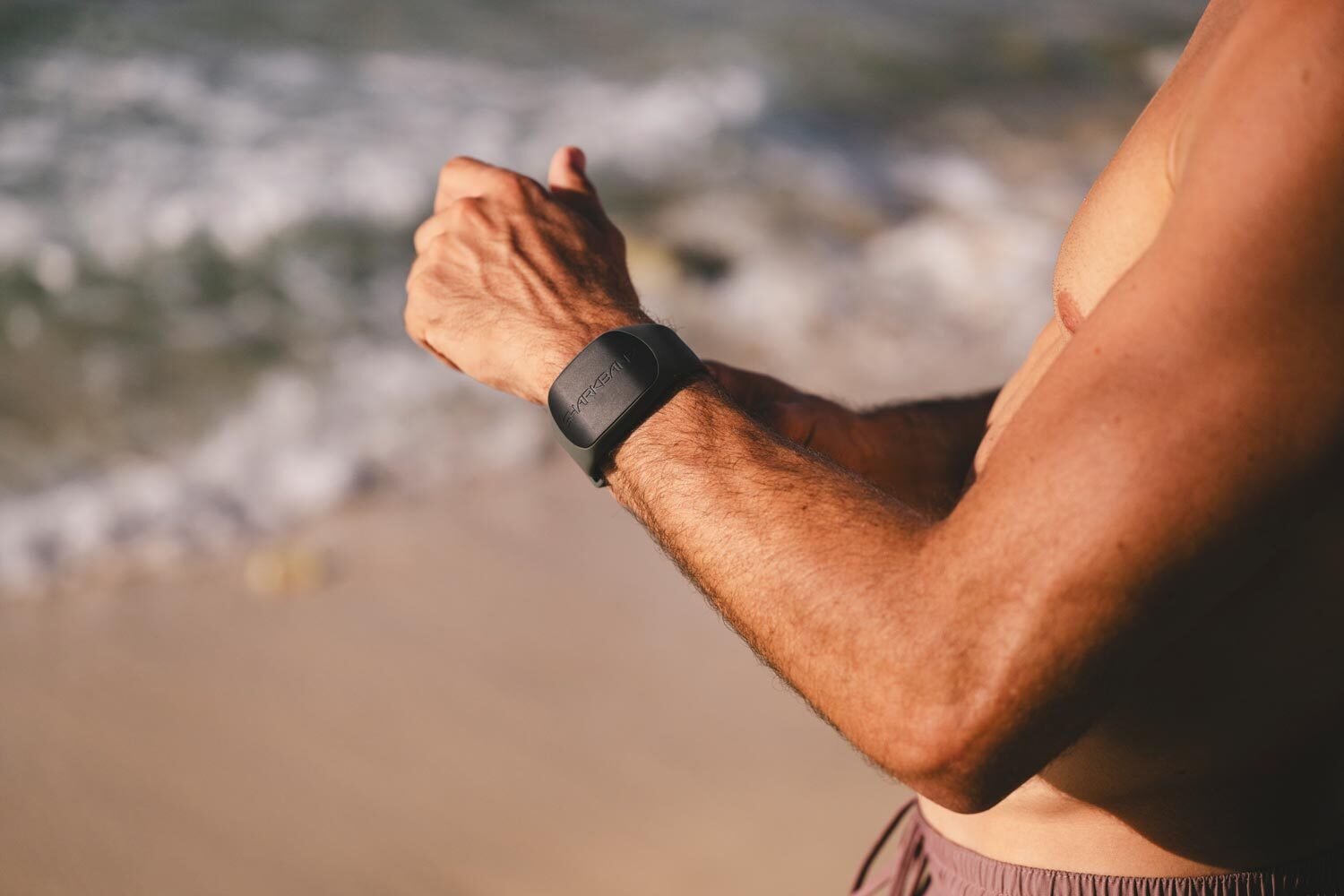
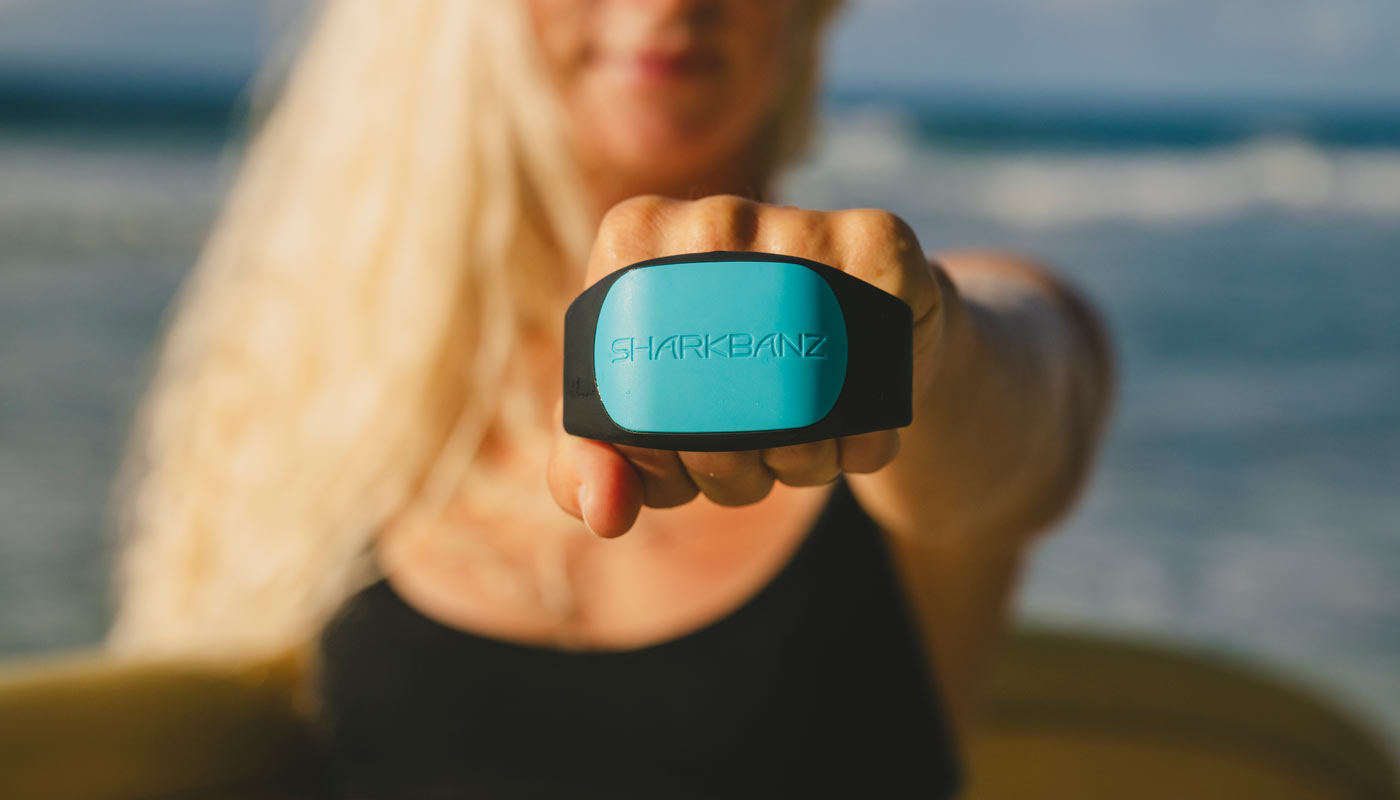
For beachgoers seeking another precaution, the Sharkbanz 2 provides a wearable, battery-free magnetic deterrent intended to reduce the risk of unwanted shark encounters.
17. Surfing and board sports accounted for 32% of shark bite incidents
Surfers and other board sport participants represented 32% of worldwide unprovoked bites in 2025.
Surfers spend extended periods in coastal waters, often around breaking waves where sharks may pursue baitfish.
In Florida, low visibility, close proximity to feeding sharks, and movement in shallow surf zones can contribute to investigative encounters. Many such bites involve smaller coastal species rather than large sharks targeting humans as prey.
Surfers who want an additional layer of protection can attach the FCS x Sharkbanz POD to their leash for a discreet, always-on magnetic deterrent field.
However, no deterrent can eliminate the possibility of a shark bite, particularly during rapid, high-speed encounters.
18. Snorkeling and freediving accounted for 15% of shark bite incidents
Snorkeling and freediving together represented 15% of worldwide unprovoked bites in 2025.
Although grouped in the ISAF statistics, these activities involve different exposure patterns.
Snorkelers generally observe marine environments near the surface, while freedivers may descend repeatedly and encounter sharks at different depths.
Scuba diving also brings participants into shark habitats, although its encounter patterns cannot be inferred from this combined snorkeling and freediving percentage.
19. Spearfishing accounted for 4 of Australia's 19 shark incidents in 2024
Spearfishing was involved in 4 of Australia's 19 recorded shark incidents in 2024, including the country's only fatal incident. All four were classified as provoked encounters.
Historical Australian research found that spearfishing accounted for 9% of shark bites between 2000 and 2022, despite its relatively small participant base.
These findings are relevant to Florida spearfishers because injured or struggling fish can attract sharks, increasing the possibility of encounters over captured fish. Spearfishing incidents are often excluded from unprovoked bite statistics.
The Sharkbanz Zeppelin uses magnetic technology designed to deter sharks approaching fishing equipment and catches, although reduced human bite risk has not been directly established.
How Dangerous Are Florida Shark Attacks Really?
Most reported shark bites in Florida are nonfatal, and many involve brief encounters with smaller coastal sharks.
The severity of an encounter depends on several factors, including shark size, injury location, water conditions, and how quickly medical care becomes available.
20. Florida recorded zero fatal unprovoked shark bites in 2025
Florida reported 0 fatalities among its 11 confirmed unprovoked shark bites in 2025.
This illustrates that a relatively high number of reported encounters does not necessarily translate into a high number of deaths.
Several factors can influence the severity of Florida shark bites:
- Species involved: Many Florida encounters involve smaller coastal sharks, including blacktips, rather than large predatory species.
- Encounter type: Numerous bites are brief incidents where sharks release the person after initial contact.
- Emergency response: Access to lifeguards, first aid, and medical treatment can influence outcomes.
- Water depth: Shallow-water encounters may allow injured swimmers to reach shore more quickly.
However, even a single shark bite can cause serious injury. Low fatality counts should not lead ocean users to disregard beach warnings or appropriate safety precautions.
What Does Florida Research Reveal About Magnetic Shark Deterrents?
Research conducted in Florida has documented behavioral responses to magnetic deterrents in some shark species. These findings help explain how shark deterrent technology may provide an additional safety measure, although fishing-related experiments do not directly measure reductions in human bite risk.
21. A Florida Atlantic University study recorded 21.7% deterrence with a magnetic device versus 2.6% with a dummy
A 2024 master's thesis from Florida Atlantic University's Harbor Branch Oceanographic Institute examined the effectiveness of the Sharkbanz Zeppelin during baited camera trials off Jupiter, Florida.
The study analyzed 3,060 shark observations across approximately 20 hours of underwater footage, involving bull, sandbar, silky, and lemon sharks.
When sharks approached within the relevant testing range, the magnetic Zeppelin produced avoidance responses during 21.7% of approaches, compared with 2.6% for an identical nonmagnetic dummy.
Bull sharks bit the control bait 9 times and the magnet-protected bait 0 times. Sandbar sharks also demonstrated measurable avoidance responses, while lemon sharks were largely unaffected.
The study was supported by the Colgan Foundation, and Sharkbanz supplied the devices. It was an academic thesis rather than a peer-reviewed journal publication.
These results are relevant because bull and other coastal sharks inhabit Florida waters. However, the experiment tested baited fishing rigs, not swimmers or surfers, and most in-range shark approaches did not result in visible avoidance. The proposed mechanism involves electromagnetic induction. As a shark moves through the magnetic field produced by a permanent magnet, an induced electrical signal may be detected by its ampullae of Lorenzini, specialized organs that sense weak electric fields.
This stimulus can trigger avoidance behavior in some sharks, depending on species, device placement, distance, and encounter conditions. The underlying mechanism is discussed in scientific research on electrosensory shark deterrents.
What Can Ocean Users Do to Reduce Risk?
Ocean users can reduce unnecessary shark encounter risks by checking conditions, avoiding areas with active feeding, and following established beach safety practices.
Shark deterrents can be considered an additional precaution, much like other personal safety equipment. However, the extent to which magnetic devices reduce human shark-bite risk has not been established by direct field measurements.
Practical steps for Florida beachgoers include:
- Check local conditions: Review beach advisories, recent sighting reports, and water clarity before entering.
- Avoid dawn, dusk, and night: Many sharks have a sensory advantage during low-light conditions.
- Stay away from murky water: Reduced visibility can make it harder to detect approaching sharks.
- Exercise caution near river mouths and inlets: These areas may concentrate baitfish and the sharks that follow them.
- Swim in groups: Staying near others can reduce isolation and improve access to assistance.
- Stay clear of fishing activity: Bait, chum, and struggling fish can attract sharks.
- Consider a deterrent device: The Sharkbanz 2 produces a permanent magnetic field that can trigger avoidance responses in certain shark species.
Government-funded research also supports the potential benefits of magnetic deterrents in fishing applications.
A Western Australia Department of Primary Industries and Regional Development trial documented reductions in shark depredation using several deterrent technologies.
In the Montebello Islands testing, approximately 40% of hooked fish were lost to sharks without a deterrent, compared with 20% when the Sharkbanz Sentry, now sold as the Zeppelin, was used.
These findings provide evidence of reduced fish losses under specific fishing conditions, not a measured reduction in human shark-bite risk.
Sharkbanz magnetic technology does not require charging or batteries. Its permanent magnetic field remains present whether the device is in or out of the water. The proposed induced electrical signal depends on relative movement between the shark and the magnetic field.
How to Spot Counterfeit Shark Deterrent Bands on Amazon
Products marketed as shark deterrent bands appear on online marketplaces at varying prices, but their technology and supporting research should be examined carefully.
Sharkbanz warns that imitation products may use weak magnets without credible evidence demonstrating shark deterrent effects.
Authentic Sharkbanz products are available through Sharkbanz's official websites and authorized retailers. Buyers should verify the seller and product authenticity before purchasing.
Reduce Shark Encounter Risks in Florida With Sharkbanz
Florida's shark attack statistics show that encounters remain uncommon, but informed precautions matter for anyone entering the ocean. Checking beach conditions, avoiding active fishing areas, and staying aware of nearby marine life can help reduce unnecessary risks.
Sharkbanz offers three magnetic deterrent products designed for different ocean activities:
- Sharkbanz 2: A wearable deterrent for swimmers, snorkelers, freedivers, and other ocean users.
- FCS x Sharkbanz POD: A leash-mounted deterrent designed for surfers who prefer an alternative to wrist or ankle bands.
- Sharkbanz Zeppelin: A magnetic deterrent developed for fishing and spearfishing applications.
All three use permanent magnetic technology that requires no batteries, charging, or activation. Research has documented shark avoidance responses under specific testing conditions, although no deterrent guarantees protection against shark bites.
Combine sensible ocean safety practices with an additional layer of protection suited to your activity.
Explore Sharkbanz products and choose the deterrent that fits your next ocean adventure.
Frequently Asked Questions
How many shark attacks typically occur in Florida each year?
Florida's recent five-year annual average was approximately 19 unprovoked bites, although yearly totals fluctuate. The 2025 total of 11 incidents was approximately 42% below that average. Water conditions, baitfish movements, beach attendance, and other environmental factors can contribute to variations in reported encounters. The figures include only confirmed unprovoked bites rather than every shark-human interaction.
Which areas of Florida are most prone to shark encounters?
Volusia County, particularly New Smyrna Beach, consistently reports the most shark encounters in Florida. It accounted for 6 of the state's 11 bites in 2025. The area's surf breaks, murky water, coastal shark populations, and high recreational activity contribute to frequent human-shark overlap. Other Florida coastal counties also experience encounters, but annual counts alone cannot establish individual risk levels.
What types of sharks are most commonly involved in Florida shark attacks?
Many Florida shark bites involve smaller coastal species, particularly sharks belonging to the requiem shark family. According to ISAF's Florida records, blacktip sharks are suspected in many of these incidents, although identifying the exact species is often difficult. Bull sharks are also important to consider because they inhabit shallow coastal and estuarine waters. Shark species identification should not be assumed when investigators lack sufficient evidence.
Are there effective personal deterrents available for swimmers and surfers in Florida?
Magnetic deterrents such as the Sharkbanz 2 use permanent magnets that create localized magnetic fields without batteries or charging. When sharks move through these fields, induced electrical signals may stimulate their electroreceptors and trigger avoidance behavior. Research has documented responses in several species, although results vary with experimental conditions. Existing fishing studies provide supporting evidence of deterrence but do not establish a specific reduction in human shark-bite risk. No personal deterrent guarantees complete protection.
What should I do if I encounter a shark while in Florida waters?
Remain calm, keep the shark in sight, and slowly move toward shore or your boat without excessive splashing. Avoid approaching, touching, or attempting to feed the shark. If a shark becomes aggressive, use available equipment to maintain distance. If it attempts to bite, defend yourself by targeting sensitive areas such as the eyes and gills. Exit the water as safely as possible and seek immediate medical assistance if injured. The International Shark Attack File provides additional shark safety guidance.