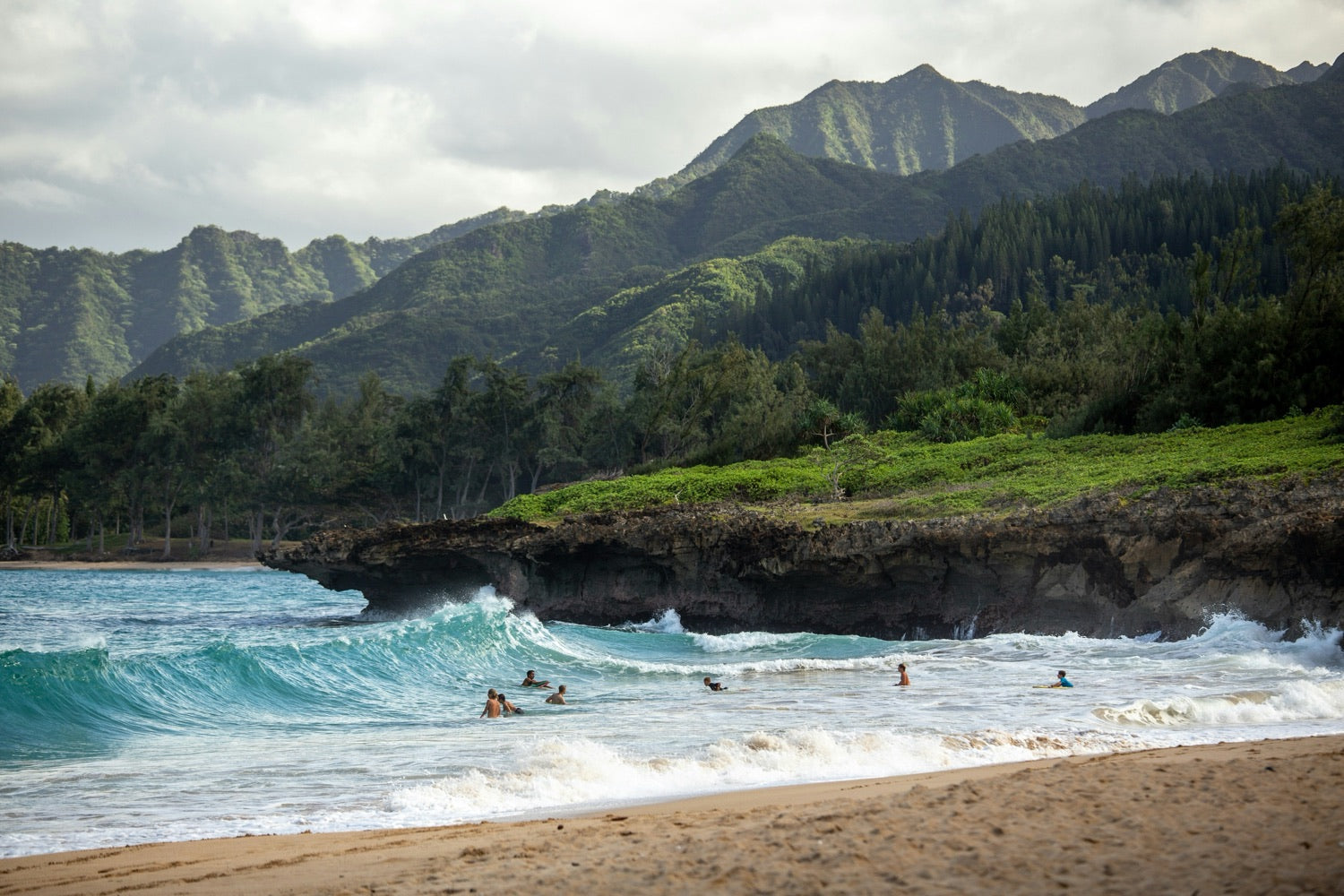



Data-driven analysis of shark encounters in Hawaiian waters, seasonal patterns, geographic hotspots, and evidence-based approaches to reducing risk
Hawaii ranks among the top three U.S. states for shark encounters, yet the actual risk remains remarkably low. The islands recorded just four unprovoked shark bites in 2025, with no fatalities. For the millions of people who swim, surf, dive, and fish in Hawaiian waters each year, understanding these statistics provides crucial context for making informed decisions about ocean safety. Many Hawaii visitors and residents now pair situational awareness with a magnetic shark deterrent as part of a layered approach to reducing encounter risk.
Key Takeaways
- Hawaii recorded four unprovoked shark bites in 2025: The four recorded incidents resulted in no fatalities.
- Hawaii's shark bite totals fluctuate: The state recorded 13 unprovoked bites in 2013, compared with three in 2018.
- Daytime encounters are common: University of Hawaii research reports that 67% of shark attacks occur between 10 a.m. and 4 p.m.
- Tiger sharks travel across Hawaiian waters: University researchers tracked sharks moving along 109 kilometers of coastline.
- Historical culling failed to reduce attacks: Despite removing 4,668 sharks, Hawaii detected no significant reduction in attack rates.
- Shark deterrents provide an additional safety layer: Magnetic deterrents may produce avoidance responses in some sharks, but their effectiveness varies by species, device placement, and encounter conditions.
How Common Are Shark Attacks in Hawaii?
Hawaii experiences relatively few shark bites each year despite extensive ocean recreation. However, annual totals fluctuate, and historical records show that some years have substantially more incidents than others.
1. Hawaii recorded 4 unprovoked shark bites in 2025
The International Shark Attack File (ISAF) documented four unprovoked incidents across the Hawaiian islands in 2025. This was slightly below Hawaii's recent average. Annual counts can fluctuate based on several factors, including changing environmental conditions and human ocean activity.
Hawaii's Department of Land and Natural Resources (DLNR) maintains its own incident records, which can differ from ISAF figures because the organizations conduct separate investigations and classifications. The ISAF figure provides the basis for national and international comparisons in this article.
For ocean users, the small annual count is reassuring, but it should not create a false sense of security. Sharks inhabit waters around all the major Hawaiian islands, and conditions can change quickly. Awareness of local warnings and water conditions remains important.
2. Zero fatal shark bites occurred in Hawaii in 2025
None of Hawaii's four unprovoked shark bites in 2025 resulted in fatalities. This demonstrates that shark encounters do not necessarily result in life-threatening injuries, although nonfatal incidents can still cause serious harm.
The severity of a shark bite depends on several factors, including the shark's size and species, the location of the injury, the circumstances of the encounter, and access to emergency medical care. A single bite from a large tiger shark can cause significant injuries even when the shark does not continue its approach.
Fatality statistics are therefore only one part of understanding shark safety. Preventing an encounter is preferable to relying on a shark releasing after contact. Ocean users should follow local safety guidance and avoid conditions associated with increased shark activity.
3. Hawaii recorded 13 unprovoked shark bites in 2013
The ISAF's historical U.S. records document 13 unprovoked shark bites in Hawaii during 2013, including one fatality. This was substantially higher than the state's total in several subsequent years.
An unusually high annual count does not necessarily indicate a permanent increase in shark activity. Shark movements, prey distribution, recreational participation, and environmental conditions can change from year to year.
The 2013 total illustrates why long-term trends matter more than isolated annual figures. Researchers can examine multiple years of data to better understand patterns while recognizing that recorded incidents alone cannot establish individual risk.
4. Hawaii recorded 3 unprovoked shark bites in 2018
The ISAF recorded three unprovoked incidents in Hawaii in 2018, with no fatalities. This was considerably lower than the 13 incidents documented in 2013.
Such variations are common in shark bite data. Because annual incident counts are relatively small, even a few additional encounters can create a substantial percentage change from one year to another.
A lower annual count does not necessarily mean fewer sharks were present or that ocean conditions were safer. It shows how frequently confirmed bites were recorded during that period, not the number of sharks encountered without physical contact.
When Are Sharks Most Active in Hawaii?
Shark encounters in Hawaii can occur throughout the day and year. Research into tiger shark movements provides a better understanding of when people and sharks may share coastal waters.
5. About 67% of Hawaii shark attacks occur between 10 a.m. and 4 p.m.
University of Hawaii tiger shark research reports that approximately 67% of shark attacks occur during daytime hours between 10 a.m. and 4 p.m. This overlaps with periods when recreational ocean activity is typically highest.
The finding challenges the assumption that shark encounters occur primarily around dawn and dusk. Although certain shark species may move closer to shore during low-light periods, the number of people participating in water activities also affects when incidents are recorded.
Ocean users should therefore remain attentive throughout the day. Avoiding dawn and dusk may be sensible in certain conditions, but daytime swimming or surfing is not automatically free of shark encounter risk.
6. Researchers tracked 15 tiger sharks to study their movements
University of Hawaii researchers captured and tagged 15 tiger sharks to investigate their movements across the Hawaiian Islands. The animals were fitted with acoustic transmitters that allowed researchers to detect their presence at underwater monitoring stations.
The research examined whether tiger sharks remained near particular coastal locations or moved widely between habitats. Understanding these movements was important because earlier shark control programs assumed that individual tiger sharks occupied relatively small territories.
The findings helped challenge that assumption. Tiger sharks moved extensively between locations, suggesting that an animal encountered near one beach might later travel to another coastal area or island.
7. Tiger sharks were tracked for up to 892 days
University of Hawaii researchers monitored tagged tiger sharks for periods extending up to 892 days, equivalent to approximately 2.4 years. This long-term tracking provided insights into shark movements that short observation periods could not capture.
The researchers found that visits to particular monitoring locations were often brief and unpredictable. Sharks sometimes disappeared from monitored areas for weeks, months, or longer before returning.
For Hawaii's ocean users, these findings explain why shark presence can change without obvious warning. A beach with no recent shark sightings is not necessarily free of sharks, and localized sightings do not reveal an animal's full movement range.
8. Tiger sharks traveled along 109 kilometers of coastline
Long-term tracking research documented tiger sharks patrolling up to 109 kilometers of contiguous Hawaiian coastline. The animals also traveled between islands, demonstrating their ability to use extensive marine habitats.
These movements may help tiger sharks locate food across different environments. Rather than remaining near one feeding location, they can move between coastal areas and offshore habitats as conditions and prey availability change.
This wide-ranging behavior has implications for shark safety strategies. Monitoring a single beach provides useful local information, but it cannot establish where a tiger shark will travel next. Understanding broader habitat use is essential when evaluating shark encounters around the islands.
What Activities Carry the Highest Shark Encounter Risk?
Swimming, surfing, and diving account for a substantial share of reported shark bites. Global incident data helps explain which activities are commonly involved, although it cannot establish individual risk without considering participation levels.
9. Swimming and wading accounted for 46% of global shark bites in 2025
The ISAF reported that 46% of unprovoked bites worldwide in 2025 involved swimming or wading. This was the largest activity category in the annual global report.
Swimming and wading are common recreational activities, often taking place in shallow areas also used by coastal sharks. Their high share of recorded incidents does not necessarily mean each swimmer faces a greater risk than someone participating in another ocean activity.
The distinction matters when evaluating shark safety. Activity-specific incident totals are useful for identifying where encounters occur, but participation levels, environmental conditions, and encounter circumstances are needed to understand relative risk.
10. Surfing and board sports accounted for 32% of global shark bites in 2025
Surfing and other board sports represented 32% of unprovoked incidents worldwide in 2025. The category includes activities such as surfing, bodyboarding, and paddleboarding.
Participants often spend considerable time in the water, sometimes beyond supervised swimming areas. Shark approaches can occur in low visibility or when animals investigate movement near the surface. These circumstances vary by shark species and location.
For Hawaii surfers, the statistic reinforces the value of understanding local shark behavior and environmental conditions. The FCS x Sharkbanz POD attaches to a surf leash cuff and uses permanent magnetic technology as an additional deterrent layer.
11. Snorkeling and freediving accounted for 15% of global shark bites in 2025
The ISAF recorded 15% of unprovoked incidents worldwide in 2025 among snorkelers and freedivers. These activities involve different exposure patterns from surface swimming or surfing.
Snorkelers typically spend substantial time observing marine life near the surface, while freedivers descend underwater and may approach reef structures or deeper habitats. Neither activity should be treated as equivalent to spearfishing, where captured fish can attract sharks and create additional risks.
Ocean users should avoid approaching or feeding sharks and remain aware of their surroundings. Freedivers and snorkelers can also consider activity-appropriate personal safety equipment while recognizing that no deterrent eliminates risk.
How Does Magnetic Shark Deterrent Technology Work?
Magnetic shark deterrents use permanent magnets to create localized magnetic fields that sharks may detect indirectly through their electroreceptive organs, called ampullae of Lorenzini. These sensitive receptors detect weak electrical signals produced by nearby animals and the surrounding environment.
Although sharks do not need a dedicated magnetic receptor to sense a magnetic field, a leading scientific explanation involves electromagnetic induction. As a shark swims through a magnetic field, its movement can generate an electrical signal detectable by its electroreceptors. The same principle can apply when a magnet moves relative to the shark.
Sharkbanz uses powerful permanent magnets to create a localized magnetic field. The resulting induced electrical stimulus may be unusually strong compared with naturally encountered signals, potentially startling some sharks and causing an avoidance response. This sensation has been compared to a bright light suddenly shining into someone's eyes in a dark room.
Relative movement is essential to the proposed induction mechanism. The shark must move through the magnetic field, or the magnet must move relative to the shark, for the movement-induced signal to arise. Magnetic field strength also decreases rapidly with distance, limiting the effective range.
The number and distribution of electroreceptors vary among shark species. These differences may influence how sharks perceive electrical stimuli, but receptor count alone does not determine whether a magnetic deterrent will work.
The scientific mechanism explains why magnetic deterrents may influence shark behavior, while controlled experiments are needed to establish actual effectiveness under particular conditions. For a deeper explanation, read the scientific review The Emerging Field of Electrosensory and Semiochemical Shark Repellents.
Which Shark Species Are Common in Hawaiian Waters?
Hawaiian waters support a wide variety of shark species, although relatively few are frequently encountered near recreational beaches. Understanding the difference between common nearshore sharks and offshore species helps explain the state's shark encounters.
12. Approximately 40 shark species occur in Hawaiian waters
The Hawaii DLNR reports that approximately 40 shark species inhabit Hawaiian waters. These range from small deep-water species to large oceanic sharks, including whale sharks.
Most of these species rarely interact with people. Many live in deeper offshore environments or occupy habitats that recreational swimmers and surfers seldom enter. The presence of a shark species in Hawaiian waters does not mean it commonly approaches beaches.
Species identification remains important when interpreting shark incident reports. Different sharks have distinct feeding behaviors, habitats, and sensory capabilities, which may influence how they respond to people or deterrent devices.
13. About 8 shark species are relatively common near Hawaiian shores
Hawaii's DLNR identifies approximately eight shark species as somewhat common in nearshore waters. Frequently encountered species include whitetip reef sharks, sandbar sharks, scalloped hammerheads, and occasionally tiger sharks.
These species occupy different parts of the coastal ecosystem. Reef sharks commonly move around reef habitats, while tiger sharks can travel widely and encounter people in a variety of marine environments.
This diversity matters when assessing magnetic deterrents. Sharks possess electroreceptive organs, but the strength of their responses to particular magnetic stimuli can vary. Research on one species cannot automatically establish the effectiveness of a device against another.
What About the 2018 Flinders University White Shark Study?
The 2018 Huveneers et al. study found that neither the Sharkbanz bracelet nor the Modom leash measurably changed white shark behavior toward baited boards. The experiment used stationary surfboard replicas, with tuna bait approximately 30 to 40 cm from the magnetic devices rather than placing the devices directly between the shark and bait.
Five deterrents were tested. Only the Ocean Guardian Freedom+ Surf electric device significantly reduced bait consumption, from 96% to 40%. The other tested products showed no measurable effect under those experimental conditions.
Sharkbanz had warned researchers that the magnetic device placement was unlikely to produce the intended response. In a July 2024 Stab interview, lead researcher Dr. Charlie Huveneers acknowledged that magnets can deter sharks and discussed how the distance between the devices and bait may have influenced the results.
Later research examined magnetic deterrents under different conditions. A Western Australian government-funded fishing trial and a Florida Atlantic University thesis documented positive outcomes using Sharkbanz fishing devices. Preliminary 2026 Texas A&M University-Corpus Christi thesis-seminar findings also reported encouraging results. However, fishing-rig studies do not directly establish reduced bite risk for swimmers or surfers.
The honest boundary
Sharkbanz does not claim to prevent high-speed white shark ambush attacks. Magnetic deterrent responses have been documented in several species under specific research conditions, but effectiveness varies with shark species, motivation, device position, and environmental conditions. No shark deterrent guarantees protection.
Did Historical Shark Culling Reduce Attacks in Hawaii?
Historical shark culling programs did not demonstrate a significant reduction in shark attack rates in Hawaii. Research into tiger shark movements helped explain why removing sharks from particular coastal areas was unlikely to provide lasting protection.
14. Hawaii culled 4,668 sharks between 1959 and 1976
University of Hawaii research documents that Hawaii removed 4,668 sharks during government-sponsored shark control programs between 1959 and 1976. The average recorded cost was $182 per shark.
The programs aimed to reduce shark encounters by removing animals from coastal areas. However, researchers found no significant decrease in attack rates despite the large number of sharks killed.
The outcome highlighted a limitation of localized shark removal. Sharks, particularly large tiger sharks, can travel considerable distances, making it difficult to control encounters by removing animals from a small area.
15. Hawaii culled 554 tiger sharks during its shark control programs
Of the sharks removed between 1959 and 1976, 554 were tiger sharks. These large predators were a particular focus because of their involvement in serious shark encounters in Hawaii.
Subsequent tracking research showed that tiger sharks do not remain confined to small coastal territories. Instead, they move widely between marine habitats, sometimes traveling substantial distances along island coastlines and offshore waters.
This behavior helps explain why historical culling failed to provide lasting protection. Modern shark safety strategies increasingly emphasize education, incident monitoring, environmental awareness, and measures that do not require removing sharks from marine ecosystems.
How Does Hawaii Compare With Other Shark Attack Hotspots?
Hawaii consistently ranks among the leading U.S. states for shark bites, although Florida records more incidents in most years. Comparing regions helps put Hawaiian shark encounters into perspective.
16. The United States recorded 25 unprovoked shark bites in 2025
The United States recorded 25 unprovoked shark bites in 2025, representing approximately 38% of the global total. Hawaii accounted for four of these incidents.
The U.S. total includes encounters across different marine environments, from Florida's Atlantic beaches to Hawaii's volcanic coastlines. Shark species, water conditions, and recreational activities differ substantially between these locations.
Comparing raw totals cannot establish which state has the greatest individual risk. Differences in ocean recreation, population, shark habitat, and reporting practices all influence incident counts.
17. Florida recorded 11 unprovoked shark bites in 2025
Florida recorded 11 unprovoked incidents in 2025, nearly three times Hawaii's four. The state accounted for 44% of U.S. incidents and 17% of the global total.
Many Florida encounters occur in shallow coastal waters where smaller shark species and recreational ocean users frequently overlap. Hawaii's tiger shark encounters can involve larger animals with different feeding patterns and movement behaviors.
These differences matter when comparing shark deterrents. Research must consider the shark species and encounter conditions rather than assuming that findings from one region automatically apply to another.
18. Australia recorded 21 unprovoked shark bites in 2025
Australia recorded 21 unprovoked shark bites in 2025. This was considerably higher than its recent five-year annual average of 13 incidents.
Five of Australia's incidents were fatal, highlighting differences in encounter severity across regions. Australian waters support several large predatory shark species, including white, tiger, and bull sharks.
The number of bites in a region does not directly indicate how effectively a deterrent works. Controlled research must examine how specific shark species respond to devices under defined conditions, including whether sharks are approaching bait, hooked fish, or people.
How Do Global Shark Attack Trends Compare With Hawaii?
Global shark bite statistics provide perspective on Hawaii's relatively small annual counts. They also demonstrate why short-term changes should be interpreted alongside longer historical trends.
19. Worldwide shark bites reached 65 unprovoked incidents in 2025
The ISAF recorded 65 unprovoked shark bites worldwide in 2025. This was slightly above the 2020 to 2024 annual average of 61 incidents.
Of the 65 incidents, nine were fatal. Australia recorded five of those fatalities, while Hawaii reported no fatal unprovoked incidents. These figures highlight the variation in outcomes across different locations and shark species.
Global bite statistics help put Hawaii's encounters into perspective. However, they cannot establish the effectiveness of shark deterrents. Controlled experiments measuring shark approaches, avoidance behavior, and interactions with protected targets provide more relevant evidence of how deterrent technology performs.
20. Global unprovoked shark bites increased from 47 in 2024 to 65 in 2025
The ISAF recorded 47 unprovoked shark bites worldwide in 2024, compared with 65 in 2025. This represents an increase of 18 incidents, or approximately 38%.
Although the year-over-year increase appears substantial, 2024 was an unusually low year for recorded shark bites. The 2025 total was closer to the recent five-year annual average, suggesting the increase should not automatically be interpreted as a lasting rise in shark encounter risk.
For Hawaii's ocean users, the broader trend reinforces the value of evaluating multiple years of data. Regional shark behavior, ocean conditions, and human activities remain more useful for everyday safety decisions than a single global percentage change.
What Shark Safety Measures Actually Work in Hawaii?
Evidence-based shark safety focuses on reducing avoidable exposure, following local guidance, and understanding that no single measure can eliminate every risk. Ocean users should consider the following precautions:
- Avoid murky water: Reduced visibility can make it harder to detect nearby sharks.
- Stay away from active fishing: Hooked fish and discarded bait can attract sharks.
- Avoid swimming near stream mouths: Runoff can reduce visibility and change local water conditions.
- Swim and dive with companions: Others may be able to provide assistance during an emergency.
- Follow warnings and closures: Respect advice issued by lifeguards and local authorities.
- Consider magnetic deterrents: Battery-free devices can provide an additional layer of shark deterrence.
What Does Research Say About Magnetic Shark Deterrents?
Independent government research and academic studies have documented magnetic deterrent responses under specific testing conditions, although the findings differ across species and applications.
The Western Australia DPIRD fishing trial examined deterrent devices, including the Sharkbanz Sentry, now sold as the Zeppelin. In the Montebello Islands trials, the proportion of hooked fish lost to sharks declined from 40% without deterrents to 20% with the Sharkbanz device. The study was funded through recreational fishing licence fees.
A 2024 Florida Atlantic University master's thesis investigated the Zeppelin on baited camera rigs off Jupiter, Florida. Across 3,060 shark observations involving four species, the magnetic device deterred 21.7% of approaches within the study's defined range, compared with 2.6% for the nonmagnetic control. Lemon sharks showed limited response, and most approaches did not produce visible avoidance. Sharkbanz supplied the devices, while the Colgan Foundation funded the research.
These findings support the potential for magnetic fields to influence shark behavior in particular circumstances. However, testing devices near bait or hooked fish is different from measuring human bite prevention, and results should not be presented as a guaranteed reduction in risk.
Reduce Shark Encounter Risk in Hawaii With Sharkbanz
Hawaii's shark attack statistics show that encounters are rare, but understanding shark behavior and ocean conditions remains essential. Whether swimming, surfing, diving, or fishing, personal safety starts with awareness and preparation.
Sharkbanz offers three magnetic deterrent products designed for different ocean activities:
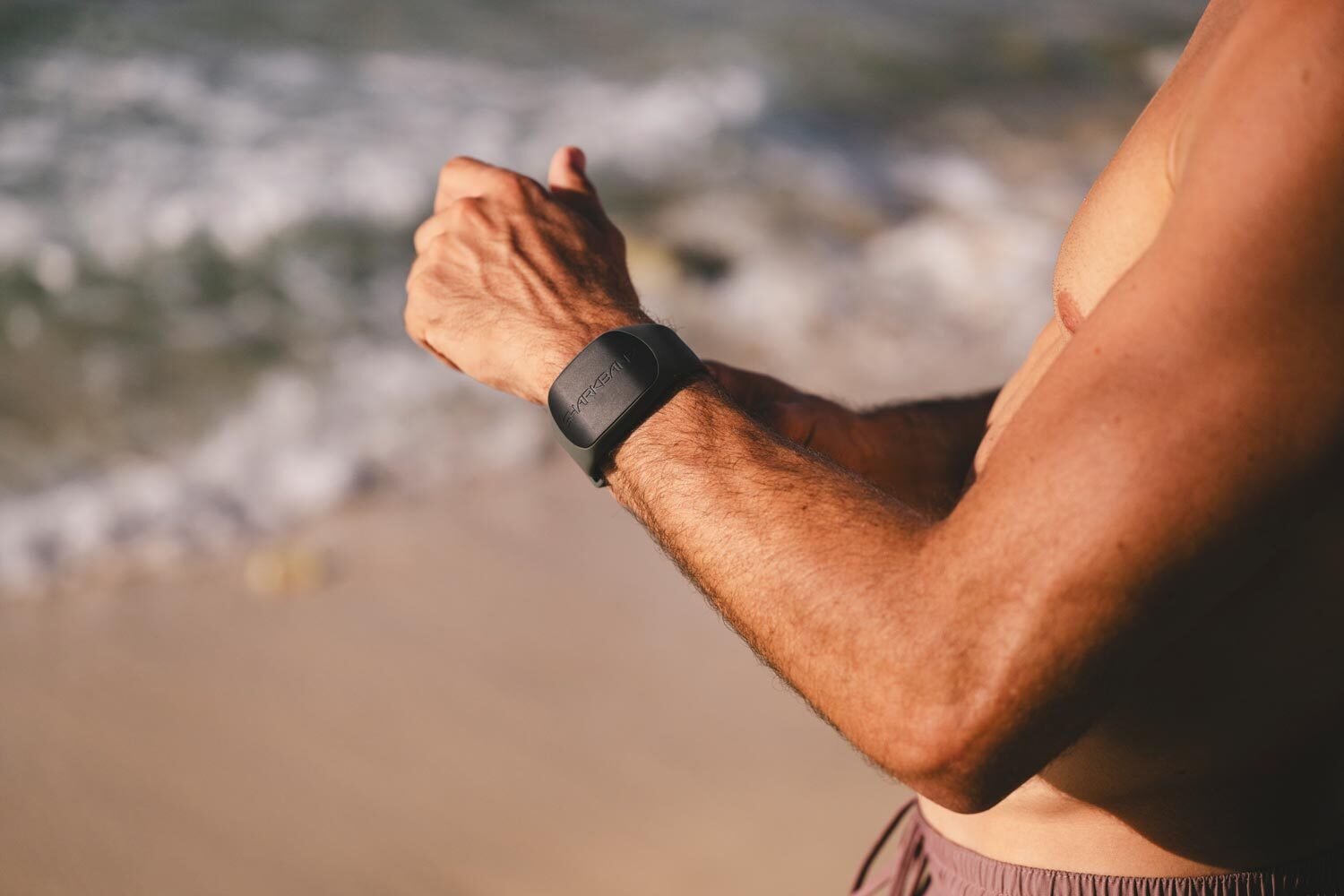
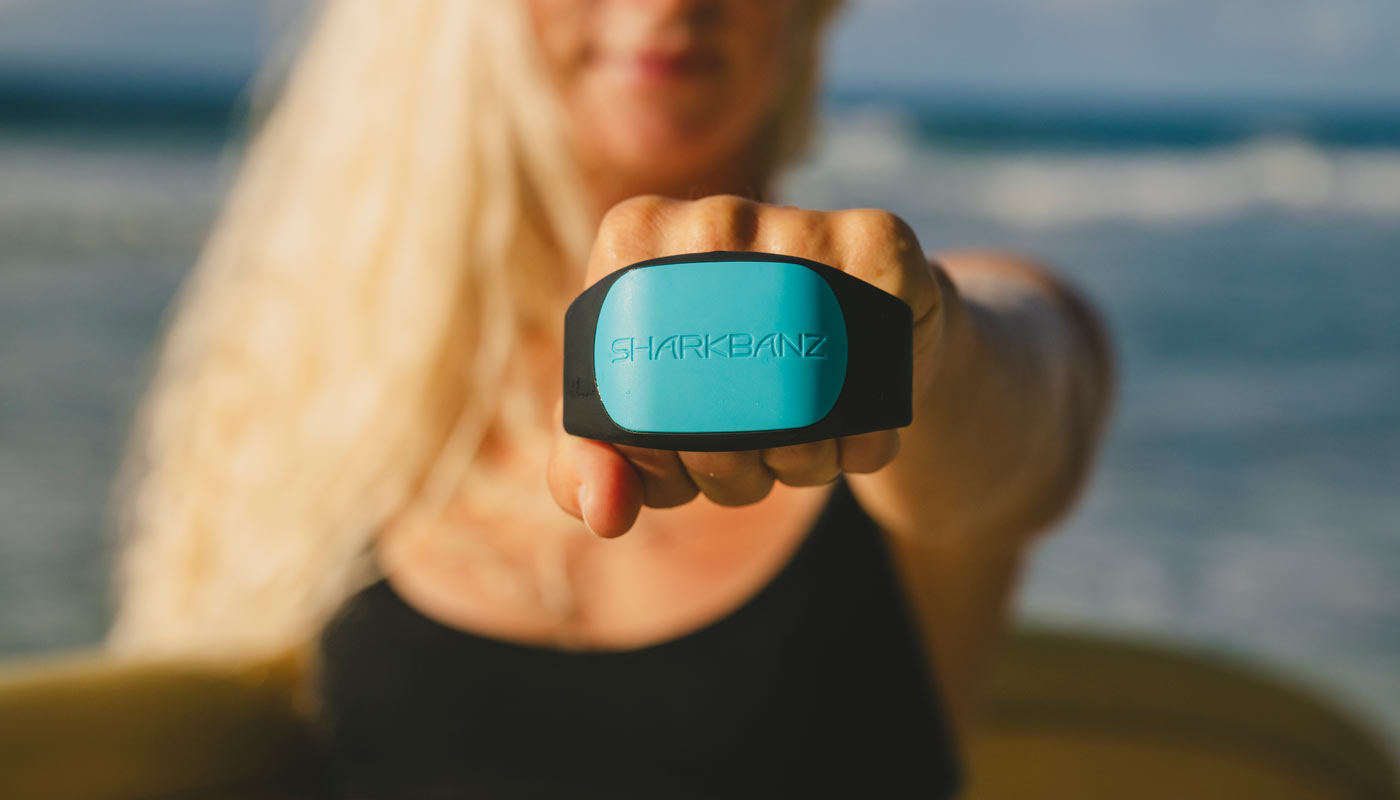
- Sharkbanz 2: A wearable wrist or ankle band for swimmers, snorkelers, freedivers, surfers, and other ocean users.
- FCS x Sharkbanz POD: A compact, leash-mounted magnetic deterrent designed specifically for surfing and related board sports.
- Sharkbanz Zeppelin: Magnetic deterrent tackle for fishing, spearfishing, and protecting catches from shark depredation.
All three use permanent magnetic technology that requires no batteries or charging. They are designed to provide an additional layer of deterrence, not guaranteed protection against shark bites.
Research has documented shark avoidance responses under specific conditions, while also identifying important limitations. Pairing appropriate deterrent equipment with local safety guidance offers a practical approach to ocean preparation.
Reduce the risk. Embrace the ocean. Explore Sharkbanz products and choose the deterrent suited to your Hawaiian ocean activities.
Frequently Asked Questions
How common are shark attacks in Hawaii?
Shark bites remain relatively rare in Hawaii. The ISAF recorded four unprovoked incidents in 2025, none fatal. Historical counts vary considerably by year, so a single annual total does not establish an individual's risk.
Which Hawaiian islands have the most shark attacks?
Maui and Oahu are among the Hawaiian islands with substantial histories of documented shark incidents. Their coastlines include popular surfing, swimming, and diving areas. Island-specific risk depends on activity, environmental conditions, and the amount of ocean recreation.
What time of year are sharks most active in Hawaii?
Sharks are present in Hawaiian waters throughout the year. Tiger shark movements can vary with feeding opportunities, reproductive behavior, and environmental conditions. Ocean users should remain alert in all seasons and follow local safety warnings.
What should you do if you encounter a shark in Hawaii?
Remain calm, keep the shark in view, and move toward shore or a vessel without unnecessary splashing. Do not approach, touch, or attempt to feed the shark. If attacked, defend yourself by targeting sensitive areas such as the eyes and gills, and seek medical attention immediately after any bite.
Are magnetic shark deterrents effective against Hawaiian sharks?
Magnetic deterrents have produced avoidance responses in several shark species during controlled research, but results vary by species and testing conditions. Sharkbanz technology has been tested in fishing applications and other experimental settings. These findings do not establish guaranteed protection against bites from Hawaiian sharks, including large tiger sharks.